

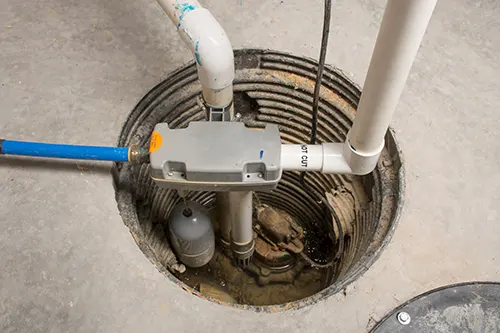
Sump pumps are designed to remove water that collects in your basement, so why would one be underperforming? Too much water in a sinking ship? Adam explains how sump pump systems are designed.
Narrator: It's time once again for the Crackman Podcast, hosted by A1 Foundation Crack Repair. I'm Darren Kincaid, and I'm here with the Crack Daddy himself, Adam Tracy. Adam has 20 years of experience in the construction industry and as a civil engineer is A1 Foundation's resident engineer on staff, solving a plethora of unique foundation problems every day. This podcast provides expert basement waterproofing, concrete repair, and preventative maintenance tips for homeowners and businesses. A1 Foundation's valuable insight will help avert the disaster of a flooded basement, health problems due to water infiltration, and protect your biggest investment, your home. The topic of today's podcast: Why is my sump pump not getting all the water out of my basement?
Narrator: So Adam, sump pumps are designed to remove water that collects in your basement, right? So, why would one be underperforming? Too much water in a sinking ship?
Adam: Sometimes that is the case, but a lot of times it's even more simple than that.
So, when we get the heavy rain and people's basements flood and they say, "Oh, I have a sump pump, but it's not keeping up with it," or "I'm still getting water downstairs," we have to go through a series of questions to figure out what's happening there.
Now, a sump pump, a fantastic tool, we install them all the time, but it's not the end-all be-all for all water issues for all time in your basement. It's a great, useful resource to have to take the water pressure off of the foundation, but it doesn't always mean that that's going to be the only thing you ever have to do in your basement.
So, the first thing, and it's so simple, but it's sometimes the most obvious one is, is it actually plugged in?
I can't tell you how many times we get the phone call from a panicked homeowner saying, "It's not working, it's not working, I need you out immediately." And then to find out that the actual cord is no longer plugged into the outlet, or that the outlet tripped and they need to go back and just reset the panel.
And then that is very simple, no need for a service call, just make sure that the actual sump pump is plugged into the wall. Maybe somebody removed it using an extension cord and forgot to plug it back in. Life happens, and oftentimes that's as simple as it comes.
Sometimes, it's about whether or not the sump pump is actually an appropriately sized sump pump.
A lot of times we'll see, you know, okay, send us a quick photo of what you have so we can evaluate the system. And sometimes, it's just like a little what we call a puddle sucker, which is a surface one that connects to a garden hose.
It does like 1 gallon every 5 minutes maybe. It's a very low flow discharge and it just simply can't keep up. It's meant to just kind of slowly drain things like a pool cover or a small puddle of water. It's not meant to really keep up with a high inflow.
So, those ones are just undersized, and it's very simple to say, "Hey, we need to go from this tiny little 1/12th horsepower tiny little pump to maybe a third or a half horsepower pump."
Putting a bigger engine in there to make it go a little faster. That's an easier analogy. And so sometimes it's as simple as that. Other times, it's an evaluation of the actual sump pump setup with the basin.
A lot of times they'll get the photo or the video from the client and the customer and they'll say, "This is the system," and it's a Home Depot 5 gallon bucket into a hole in the floor and it's about 9 in down and there's two drill holes in there for the water to come in.
And really it's just like trying to drain the ocean with a small cup, right? You're just not getting enough volume in there for the sump pump to do its job.
So, what happens? The water pressure comes up and puts pressure on other places and it comes in or overloads that little setup.
So, what's the fix for that?
Well, you got to get the little 5 gallon bucket out of there and you got to put a real actual basin in.
Most basins are going to be around 20 to 24 in diameter. They're going to go down anywhere from 18 in to 3 ft down below the slab.
The bigger the basin, the bigger the bucket, the more opportunity you have to collect water and bring it out.
The other thing that sometimes is the case is just really improper placement of the sump pump, or you might have a situation where the house has such a high water table that you might need multiple sump pumps or, in some cases, a French drain or perimeter drain.
In those cases, where maybe you're near a wetland resource, maybe you just have terrible soil or it just collects water and sits under the house, one sump pump is not enough.
And then the obvious one that most people just overlook all the time is how is the water actually coming in?
Well, they have a sump pump in the corner and water's coming through a crack in the foundation, and they can't understand why the basement's still getting wet.
Well, because the sump pump's designed to take the pressure under the floor. The crack is still allowing the water to come through.
That sump pump's not going to drain the crack on the other side of the house, so you actually have to physically repair the foundation in order to make that work more.
So, when you do have a situation where water is coming into the foundation and you have a sump pump setup, a homeowner can easily go through the very simple ones.
Is it plugged in? Is there electricity there? Does the pump actually work? Does it turn on?
Make sure that the float actually goes with it.
And then if everything looks like it's working, well, then it's about an evaluation by a professional.
You don't always need to have a person run out there to do a service call to figure out what's going on.
Sometimes it's simple. Sometimes it requires a whole upgrade to the system that they're not going to be able to do at 11:00 at night, so to have that emergency call come out sometimes doesn't make sense.
So, take photos, take videos of the setup, see where the water is coming in because that's all evidence that we would need in order to help diagnose what is the situation, why isn't it working, and what improvements can you make to make sure it doesn't happen again.
So, be diligent, be smart about it, don't panic and take lots of photos.
Narrator: Well, thanks, Adam, for explaining why a sump pump would struggle to keep up with the basement water volume and what you can do about it.
Narrator: If you have a basement water problem and think you need a professional, or if you'd like more information on foundation crack repair and basement waterproofing topics, please visit a1foundationcrackrepair.com or call Adam at (866) 929-3171, or you can email Adam at info@a1foundationcrackrepair.com. Thanks for listening and keep that basement dry.