

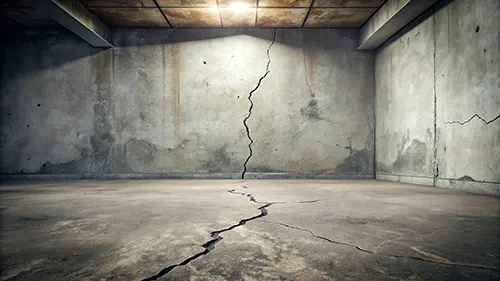
Not every crack in your foundation is a structural problem, but some are, and knowing which is which matters. The difference between a cosmetic foundation crack and one that needs structural repair often comes down to where it sits on a three-category spectrum: cosmetic, maintenance, or structural. In this episode of the Crack Man Podcast, A1 Foundation's resident civil engineer, Adam Tracy, walks through how to tell them apart, what each category actually means, and when monitoring is enough versus when you need a foundation expert on site.
Narrator: It's time once again for the Crack Man Podcast, hosted by A1 Foundation Crack Repair. I'm Darren Kincaid, and I'm here with the crack daddy himself, Adam Tracy. Adam has 20 years of experience in the construction industry and as a civil engineer, is A1 Foundation's resident engineer on staff, solving a plethora of unique foundation problems every day. This podcast provides expert basement waterproofing, concrete repair, and preventative maintenance tips for homeowners and businesses. A1 Foundation's valuable insight will help avert the disaster of a flooded basement, health problems due to water infiltration, and protect your biggest investment, your home. The topic of today's podcast: What is the difference between a cosmetic foundation crack and one that actually needs maintenance?
The Three Categories of Foundation Issues
Narrator: So Adam, it’s common to see hairline cracks in concrete—I see them all the time. Is there a point where the crack is just something to keep an eye on, and when you actually need to take action?
Adam: Yeah, I think that when we look at foundation issues in general, they fall into three different categories of concern and action levels. Regardless of whether it’s a crack, this applies to almost any foundation issue. We’ll focus mostly on poured concrete and cinder block foundations, because stone foundations have a whole different set of considerations due to their age and dynamic nature.
When we’re looking at poured concrete and block foundations, the three general categories are: cosmetic issues, maintenance issues, and structural issues. While we try to clearly define each category, there’s often some overlap. Sometimes an issue straddles the line between maintenance and structural, or begins as cosmetic and progresses further.
What Counts as a Cosmetic Foundation Crack?
Let’s start with cosmetic issues. The word “cosmetic” gets thrown around a lot in home inspections, real estate transactions, or from someone saying, “It’s nothing to worry about—it’s just cosmetic.” But what does that really mean?
In foundation terms, cosmetic issues are things you typically monitor, and in some cases, they may require minor maintenance. Most homes in this area will have some cosmetic foundation issues. They’re not unique or one-off problems; they’re fairly common in homes throughout the neighborhood or town. Sometimes they require remediation, and sometimes they just require monitoring.
Common Examples of Cosmetic Concrete Issues
Examples include pitting in concrete floors, like when a garage floor isn’t as smooth as it once was. Road salts brought in during winter can deteriorate the surface. Structurally, the floor may still be fine—it’s mainly a cosmetic issue that you can address early or repair if it worsens.
Spalling is another example—when the outer edges of concrete begin to crumble. This should be monitored because excessive spalling can move from cosmetic into maintenance or even structural territory.
Cold pours are also common. This is where one section of concrete meets another, creating a visible line. It’s not necessarily a problem, but it’s something to keep an eye on—especially if two concrete trucks poured at slightly different times, leaving a seam.
You might also see honeycombing or poorly consolidated concrete, where small voids or rough patches appear on the surface.
Finally, one of the most common cosmetic issues is efflorescence. Efflorescence is the white, chalky residue that forms when salts and minerals in the concrete are pushed to the surface due to moisture or hydrostatic pressure. On its own, it’s usually not damaging, but it can signal underlying moisture issues.
By themselves, most cosmetic issues aren’t immediately harmful. However, if they progress or are left unchecked, they can shift into the maintenance category.
When a Foundation Crack Becomes a Maintenance Issue
Maintenance issues generally require some form of remediation. For example, a crack that someone labels as “just cosmetic” should be properly evaluated. Most foundation cracks actually extend all the way through the foundation wall. That can disrupt the load path from the house down to the soil, which makes it more than just a surface issue.
That’s why foundation cracks—whether caused by shrinkage, settling, or overloading—should be taken seriously. You might see cracks extending from beams, cracks that resemble shattered glass from drying concrete, or widespread floor cracks that suggest hydrostatic pressure problems.
How Maintenance Cracks Become Structural Problems
Most foundation cracks fall into the maintenance category. If addressed early, they can be relatively inexpensive to fix. If ignored, they may develop into structural issues, where repairs become significantly more complex and costly.
Many concerns raised during home inspections, by realtors, friends, or even homeowners themselves, need proper evaluation to determine which category they fall into. Some cosmetic issues can remain harmless indefinitely. Maintenance issues, however, should typically be addressed sooner rather than later to prevent them from becoming structural.
Why the Terminology Matters
It’s important to understand the terminology. Sometimes what’s called “cosmetic” is actually a maintenance issue, and sometimes a maintenance issue is already structural.
When in doubt, keep an eye on it, consult a foundation expert, and let them guide you through the process.
Thanks, Adam, for explaining the difference between a cosmetic foundation crack and one that actually needs maintenance.
Narrator: If you have a basement water problem and think you need a professional, or if you like more information on foundation crack repair and basement waterproofing topics, please visit A1foundationcrackrepair.com, or call Adam at (866) 929-3171, or you can email Adam at info@a1foundationcrackrepair.com. Thanks for listening and keep that basement dry.
Cosmetic vs Structural Foundation Crack: A Quick Recap
If you're trying to decide whether the crack in your wall or floor needs attention, Adam's three-category framework gives you a starting point:
- Cosmetic: Surface-level issues like pitting, spalling, cold pours, honeycombing, and efflorescence. Usually monitored, sometimes repaired.
- Maintenance: Cracks that extend through the wall and disrupt the load path. Should be evaluated and repaired before they progress.
- Structural: Cracks tied to settling, hydrostatic pressure, or overloading. Repairs are more involved and more expensive the longer they wait.
The hard part is that these categories can overlap, and a cosmetic-looking crack can already be a maintenance issue underneath. If you are not sure which category your crack falls into, a proper evaluation from a foundation expert is the safer call. A1 Foundation Crack Repair has been diagnosing and repairing foundation cracks across MA, NH, RI, and CT for over 30 years. Call (866) 929-3171 or request a free estimate online.