

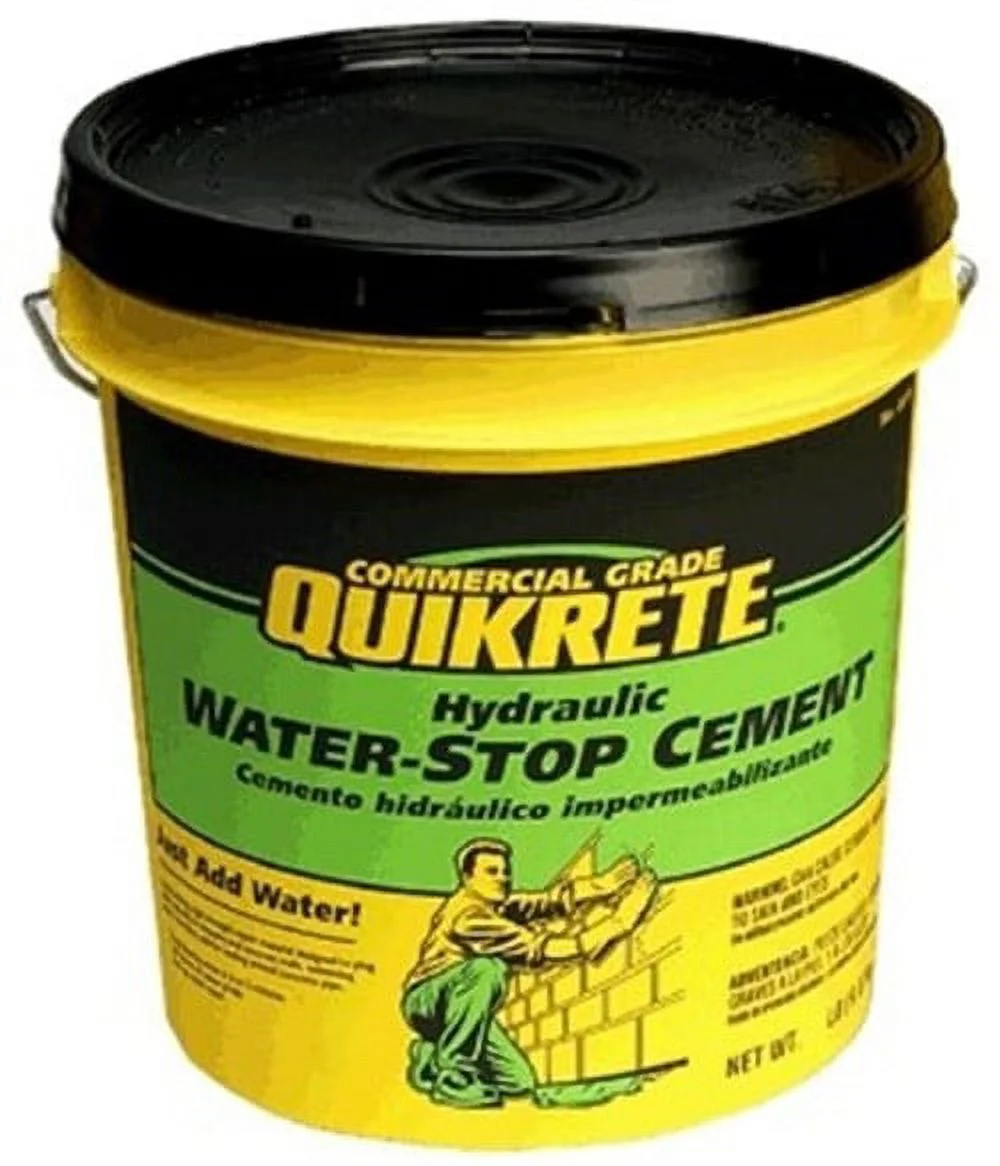
The Crack Daddy has talked in the past about how ineffective hydraulic cement is at stopping water leaks long-term. But if you put enough hydraulic cement on a crack, eventually it’ll stop the water, won’t it? Adam explains why that is faulty logic.
Narrator: It's time once again for the Crackman Podcast, hosted by the A1 Foundation Crack Repair. I'm Darren Kincaid and I'm here with the crack daddy himself, Adam Tracy. Adam has 20 years of experience in the construction industry, and as a civil engineer, is A1 Foundation’s resident engineer on staff, solving a plethora of unique foundation problems every day. This podcast provides expert basement waterproofing, concrete repair, and preventative maintenance tips for homeowners and businesses. A1 Foundation’s valuable insight will help avert the disaster of a flooded basement, health problems that are water infiltration, and protect your biggest investment, your home. The topic of today's podcast: How much hydraulic cement does it take to stop a water leak?
Adam: So Adam, you've talked in the past about how ineffective hydraulic cement is at stopping water leaks long-term. But it got me thinking. If you put enough hydraulic cement on a crack, eventually it will stop the water, won't it?
Well, Darren, that's a common misconception with a lot of people, and we see it all the time. Hydraulic cement is great, and it has a purpose, and its purpose is temporary, immediate closure of an opening that is leaking water. So if you have a crack and it's immediately spurting water through in an emergency event, hydraulic cement is going to give you a little bit of time before you flood your whole basement out, and it'll definitely give you an opportunity to get ahead of the situation in order to call a professional to have it done properly.
The common misconception, as is with most things in life, is that more is better. And when it comes to hydraulic cement, not necessarily true. So it's a common issue that we see is that you have an issue, you have water coming in, somebody has some hydraulic cement, maybe stored in the basement or in the garage, or they'll run to their big box retailer, go get some, slap it on there, problem is resolved, and then the next rainstorm comes through, and water is coming through again.
So it's important to understand why that happens first, I think. And part of the reason why is that hydraulic cement is a very strong masonry material. It's mostly Portland cement with some other additives in there, and the material is extremely rigid. I mean, most cement materials base is going to be rigid, but there's varying degrees of rigidity in different masonry materials, and hydraulic cement is definitely towards the top of that.
And the problem with that is that most foundation issues are a little bit more dynamic than we think. Even though a foundation crack appears to never really change, the reality is that it expands and contracts with temperature and humidity changes just like any material on earth. So what happens is you put a very rigid material over two other rigid materials, which is both sides of the foundation crack or a pipe or whatever else might be leaking here.
That natural movement of the foundation, even though it's ever so slight and not perceptible to our eyes, does not coincide with any movement of the hydraulic cement. So you have a rigid surface going over a broken surface, and that broken surface moves. The hydraulic cement will either re-crack or get some seams opening around the edges there, and so you get enough water pressure, and then all of a sudden the water comes through again.
So a lot of times, most homeowners say, “Well, I bought 5 gallons or 10 lbs of this stuff. I've used a very small percentage. I'm going to use more. It worked last time, it'll work this time.” And they keep putting more on. It might slow it down a little bit, and then they'll put more on, and then they'll put more on, and then they'll put more on.
All of a sudden, before you know it, you have what looks like a termite hill going up the side of a wall, with tens of pounds of hydraulic cement stacked on top of each other. And really, you're not solving the problem. You're just slowing it down a little bit, which in a lot of cases is great for emergency events.
But the reason why it doesn't work is because, like we talked about, more is not going to be better. You're just adding a flawed product onto a flawed situation. The reality is, you need something that is going to be a little bit more flexible—something that will move with the foundation and is designed to react to that movement.
So when we use an injection process or a carbon fiber process for waterproofing, the material has a very high rigidity value to it. However, it does move with the foundation. So it doesn't re-split open, and it doesn't cause that water leaking to happen. Again, that's why we can give you warranties on this kind of stuff.
So if you think more is better in a hydraulic cement situation, think again. It is an emergency slow-down technique so you can call the professionals to do it properly.
So make sure you call A1 Foundation Crack Repair. Let us evaluate it. We can work with whatever you put on there to slow it down and then get you fully sealed, fully repaired, and able to move on with your life—without worrying about buying another bucket of hydraulic cement.
Narrator: Thanks, Adam, for explaining that even a crap load of hydraulic cement isn't enough to stop water. The moral of the story is: get that foundation crack fixed properly.
Narrator: If you have a basement water problem and think you need a professional, or if you'd like more information on foundation crack repair and basement waterproofing topics, please visit A1FoundationCrackRepair.com or call Adam at (866) 929-3171. Or you can email Adam at info@a1foundationcrackrepair.com. Thanks for listening and keep that basement dry.